Málaga is renowned for its mild, almost spring-like winters. However, this year the thermometer has given us a surprise with unusually low temperatures. And whilst for us it simply means digging the coat out from the back of the wardrobe, for the invasive species keeping our province on edge, this cold is a determining factor that is going to change the rules of the game this spring.
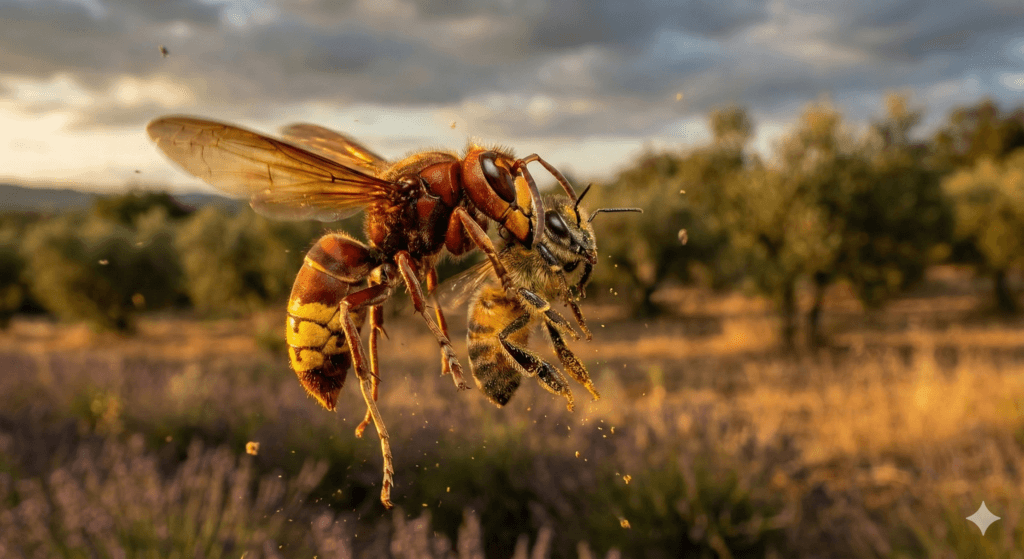
Real threat: Vespa orientalis is a relentless predator of the honey bee. Its presence in Málaga not only affects biodiversity, but puts the agricultural and beekeeping output of our province at serious risk.[/caption]
We are talking about the two major threats that concern us: Vespa orientalis (the oriental hornet) and Vespa velutina (the Asian hornet). This winter will affect them in very different ways, and the results could be quite contradictory.
Vespa orientalis: A brief reprieve from its advance
The oriental hornet is, at present, the most abundant species in Málaga. It is easy to identify by its two distinctive yellow bands at the end of the abdomen. It is a species that thrives in heat and has adapted to our coastline precisely because of our typical weather conditions.
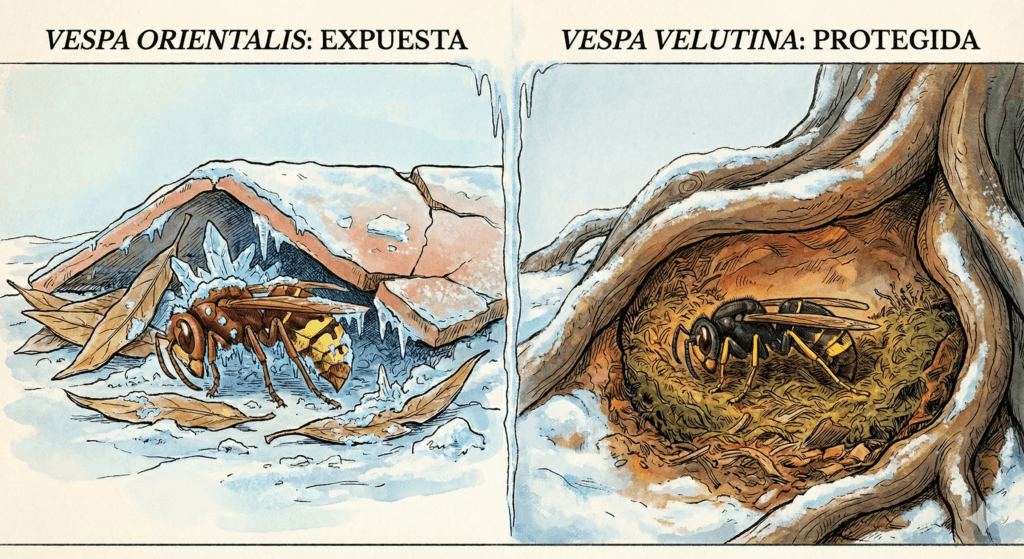
However, intense cold does not suit it at all. Unlike other insects, the orientalis is not particularly efficient at protecting itself during its diapause phase (the hibernation state of the queens). By not sheltering deeply enough, or not being adapted to sustained frosts, this winter may have dramatically reduced the number of queens that will survive through to spring. One might say that the cold has done part of the control work for us, slowing its explosive growth along the Costa del Sol somewhat.
Vespa velutina: The cold is its ally
This is where the situation becomes more complicated. Whilst the oriental hornet suffers, the Vespa velutina feels right at home. This species is far better adapted to cold, wet climates (let us not forget that it entered Spain via the north of the country).
For the velutina, this Málaga winter has not represented a setback — quite the opposite, it has been a competitive advantage. With the oriental hornet population reduced by low temperatures, the velutina faces less competition for resources and territory. This could accelerate its expansion into areas previously dominated by the oriental hornet, giving it a golden opportunity to establish itself more firmly across our province.
An uncertain future for our countryside
The key unknown that experts are working with is how these two species will interact in the near future. Will they compete fiercely for the same resources, or will they learn to coexist by dividing up the territory? What is clear is that the outlook for our beekeepers and farmers is far from encouraging, as both species pose a genuine risk to biodiversity and crops.
Innovation and Safety: Trust only certified professionals
Within the sector, we are actively working and researching innovative solutions to combat these pests more effectively. However, it is vital to remember that until these new solutions have received official authorisation from the relevant health authorities, they cannot be applied.
Against this backdrop of uncertainty and growing pest pressure, we have detected a worrying rise in “rogue operators” — individuals who, without proper training or scruples, offer miracle solutions using non-approved products or reckless techniques that put both human health and the balance of our ecosystems at serious risk.
In situations like this, don’t take chances. For any intervention, trust only companies and professionals registered with the ROESBA (Official Register of Biocidal Establishments and Services of Andalusia). It is the only way to guarantee wasp removal that is safe, legal, and effective.
Have you spotted a suspicious nest or specimen in your area? The RapiPlaga team is at your disposal.