Málaga is known for its mild, almost spring-like winters. This year, however, the thermometer has surprised us with unusually low temperatures. And while for us it only means digging our coats out from the back of the wardrobe, for the invasive species that have our province on edge this cold is a decisive factor that will change the rules of the game this spring.
A real threat: Vespa orientalis is a relentless predator of the honeybee. Its presence in Málaga not only affects biodiversity, but also puts our province’s farming and beekeeping in jeopardy.
We are talking about the two big threats that concern us: Vespa orientalis (the oriental hornet) and Vespa velutina (the Asian hornet). This winter will affect them in very different ways, and the results could be contradictory.
Vespa orientalis: a “breather” in its advance
The oriental hornet is currently the most common in Málaga. It is easy to recognise by the two distinctive yellow bands at the end of its abdomen. It is a heat-loving species that has adapted to our coast precisely because of our usual weather.
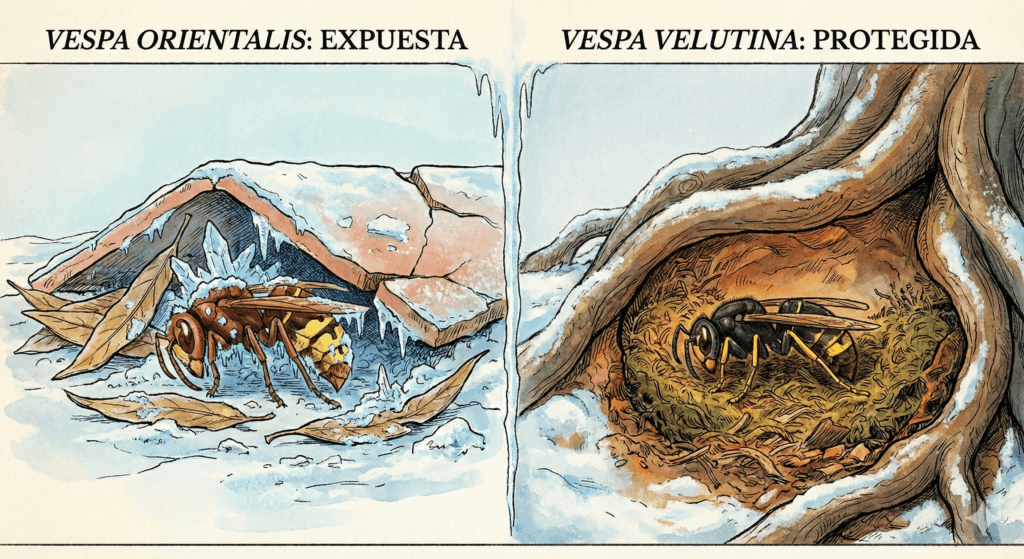
However, intense cold does not suit it at all. Unlike other insects, orientalis is not very good at protecting itself during diapause (the hibernation stage of the queens). As it does not hide very deep and is not adapted to repeated frosts, this winter may have drastically reduced the number of queens that survive until spring. You could say that the cold has done part of the control work, slowing down its explosive growth on the Costa del Sol a little.
Vespa velutina: the cold is its ally
This is where things get complicated. While the oriental hornet suffers, Vespa velutina feels right at home. This species is much better adapted to cold, damp climates (let’s not forget that it entered Spain through the north).
For velutina, this Málaga winter has not been a setback but rather a competitive advantage. With the oriental hornet population reduced by the low temperatures, velutina faces less competition for resources and territory. This could speed up its spread in areas where the oriental hornet used to dominate, giving it a golden opportunity to establish itself more firmly in our province.
An uncertain future for our countryside
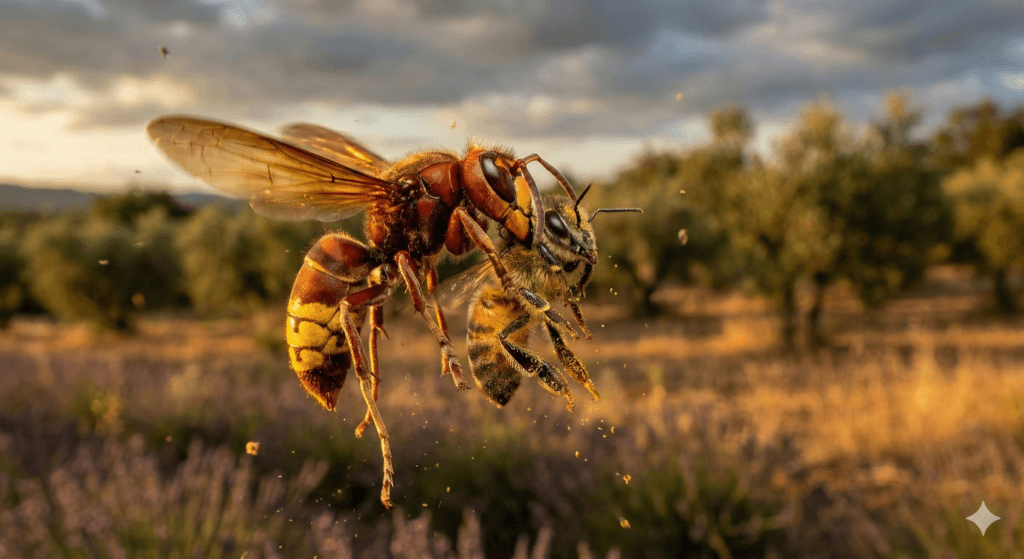
The big unknown for experts is how these two species will interact in the near future. Will they compete fiercely for the same resources, or learn to coexist by sharing out the territory? What is clear is that the outlook for our beekeepers and farmers is far from encouraging, as both species pose a real risk to biodiversity and crops.
Innovation and safety: trust only professionals
In our sector, we are working on and researching innovative solutions to stop these pests more efficiently. However, it is vital to remember that until these new solutions are officially authorised by the health authorities, they cannot be used.
In this climate of uncertainty and a growing problem, we have noticed a worrying rise in “professional intruders”: people with no training and no scruples who offer miracle solutions with unapproved products or reckless techniques that put both people’s health and the balance of our ecosystems at risk.
In situations like this, don’t take chances. For any treatment, trust only companies and professionals registered with ROESBA (the Official Register of Biocide Establishments and Services of Andalusia). It is the only way to ensure safe, legal and effective wasp and hornet removal.
Have you seen a suspicious nest or hornet in your area? At RapiPlaga we are here to help.